When a filling isn't enough but a crown isn't needed.
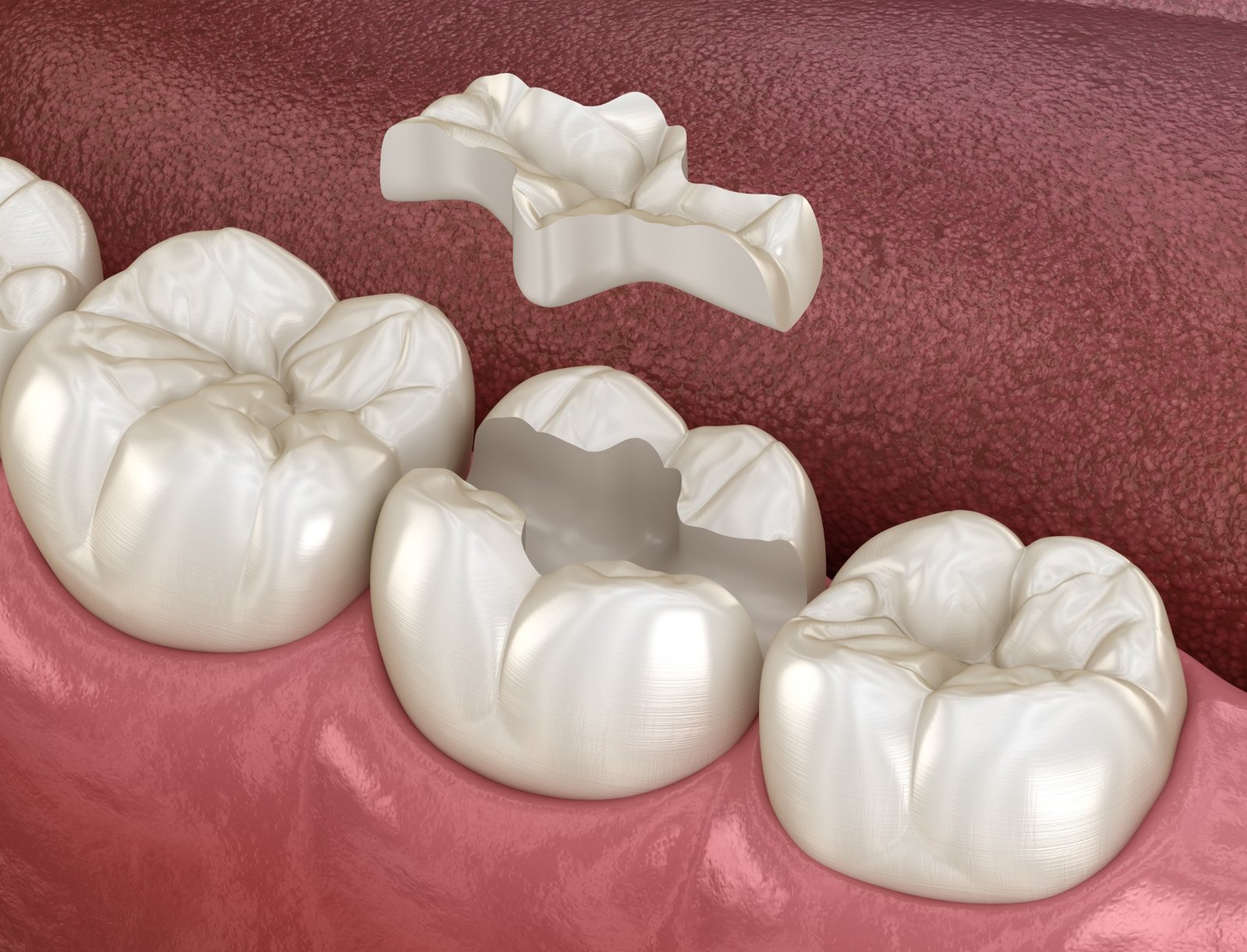
When a back tooth is too damaged or worn for a simple filling, but still has enough healthy structure to avoid a full crown, an onlay is often the perfect middle ground. Onlays cover the chewing surface and one or more cusps of a tooth, restoring its strength, shape and bite — while preserving as much of your natural tooth as possible.
What Is an Onlay?
An onlay is a custom-made restoration that fits onto the biting surface of a back tooth. Unlike a crown, which covers the entire tooth down to the gum line, an onlay only covers the parts that actually need restoring. It’s sometimes called a “partial crown”.
Materials
Onlays are typically made from:
Composite Resin
Tooth-coloured material that blends naturally with your smile. A good balance of aesthetics and function.
Porcelain / Ceramic
The strongest aesthetic result. Highly durable and natural-looking — ideal for visible teeth.
Gold
Traditional and extremely long-lasting. Sometimes chosen by patients for molars where durability is the priority.
Your dentist will recommend the most suitable material based on the tooth’s position, the forces on it, and your preferences.
When Are Onlays Suitable?
Onlays are often recommended when:
A tooth has large decay or an old filling failing, but the walls of the tooth are still sound
A cusp has fractured but the rest of the tooth is healthy
A previous large filling is wearing down and needs something more durable
You want to preserve more natural tooth structure than a crown would require
For teeth that are more heavily broken down, a crown may still be the better option. For smaller cavities, a filling is usually all that’s needed. Onlays sit cleanly between the two.
The Process
Onlays typically take two visits:
1
The damaged portion of the tooth is removed, a digital or traditional impression is taken, and a temporary covering is placed.
2
The custom onlay is tried in, checked for fit and bite, and permanently bonded in place.
At Spixworth Dental, onlays are made by a UK-based dental lab to ensure the highest-quality materials and fit.
How Long Do They Last?
With good oral hygiene and regular check-ups, onlays typically last 10–15 years — often longer for gold or high-grade ceramic.
Brush and floss daily
Avoid hard foods (ice, pens, nutshells)
Wear a night guard if you grind your teeth
Visit us regularly for check-ups
NHS or Private?
NHS
Where a restoration is clinically necessary, the NHS will usually cover a filling or a crown under the relevant band. Onlays are not typically available on the NHS.
Private
Premium onlay options in ceramic, composite and gold are available privately. Your dentist will talk you through all the options and costs before anything starts.